
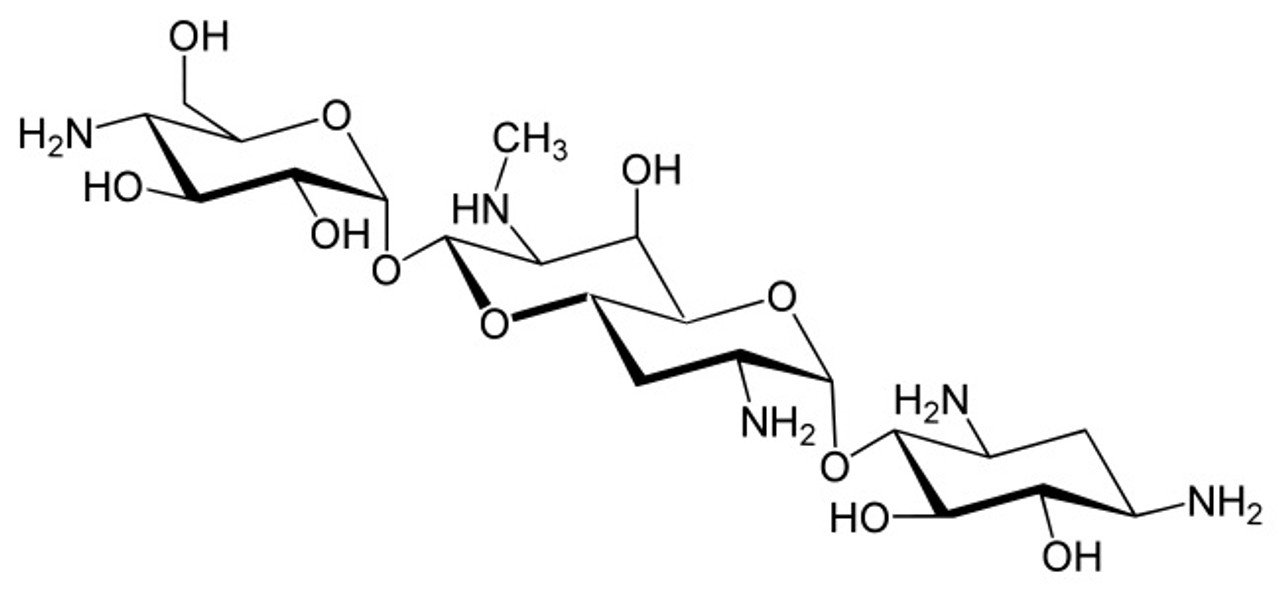
Apramycin Sulfate is an aminoglycoside antibiotic which binds the deep groove of RNA and effectively inhibits ribosomal translocation prohibiting protein synthesis. Apramycin was formerly called Nebramycin factor. The compound is used in susceptibility testing applications. Apramycin is sparingly soluble in water.
| Mechanism of Action |
Apramycin Sulfate binds to the aminoacyl-transfer RNA site (A site) in the prokaryotic 30S ribosomal subunit. This results in inhibition of ribosomal translocation thus an inhibition of protein synthesis. The ribosome is a rich target for small-molecule antibiotics, and they use varied strategies to interfere with translation. |
| Spectrum | Apramycin Sulfate has activity against Gram-negative bacteria. |
| Microbiology Applications | Apramycin Sulfate is commonly used in clinical in vitro microbiological antimicrobial susceptibility tests (panels, discs, and MIC strips) against Gram-negative microbial isolates. Medical microbiologists use AST results to recommend antibiotic treatment options. Representative MIC values include:
|
| Molecular Formula | C21H41N5O11 • H2SO4 |
| References |
Davis BD (1987) Mechanism of bactericidal action of aminoglycosides. Microbiol. Rev. 51(3): 341-350 O'Connor S, Lam LKT, Jones ND, Chaney NO (1976) Apramycin, a unique aminocyclitol antibiotic. J. Org. Chem. 41(12):2087 Tsai A et al (2013) The impact of aminoglycosides on the dynamics of translocation elongation. Cell Rep. 3(2):497-508 |
| MIC | Escherichia coli| 1 - >512|| Escherichia coli (ATCC 25922)| 4|| Haemophilus parasuis| 4 - 64|| Klebsiella pneumoniae| 2 - >256|| Pseudomonas aeruginosa| 4|| |