
Persistent Helicobacter pylori (H. pylori) infection causes a variety of gastrointestinal diseases and can even cause gastric cancer. Normally, host cells use a mechanism called autophagy for cell homeostasis. This mechanism transports misfolded proteins and damaged organelles into lysosomes for eventual degradation and reuse. Studies have found that autophagy can also be used as an immune defense mechanism to help eliminate invading pathogens, and this mechanism is termed xenophagy.
The Gram-negative H. pylori invades and proliferates in stomach epithelial cells. Increased doses of antibiotics are required to eliminate H. pylori that have invaded host cells. Intracellular survival and proliferation of H. pylori are key factors of persistent infection. There is mounting evidence that H. pylori can actually inhibit xenophagy via microRNA (miRNA) by regulating the expression of key autophagy-related genes.
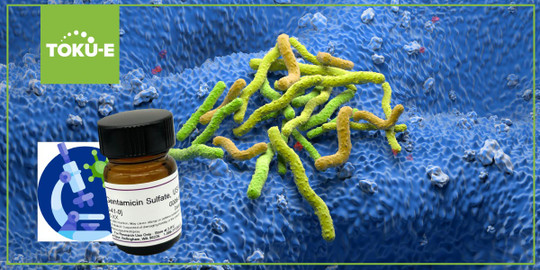
Authors worked with GES-1 cell lines and found H. pylori infection obstructed autophagy flux degradation stage in these cell lines. Authors used western blot analysis, a mRFP-GFP-LC3 transfection assay, and transmission electron microscopy in their study. They also used a Gentamicin Protection Assay using Gentamicin Sulfate (TOKU-E) to confirm that the inhibition of xenophagy is actually a benefit for intracellular H. pylori survival. This method is used to measure the ability of bacteria to invade and survive inside host cells. Gentamicin is an antibiotic that cannot penetrate most host cells, to kill bacteria that remain outside the host cells after an infection period. The remaining, protected intracellular bacteria are then counted to determine invasion efficiency and survival, often by lysing the host cells followed by serial dilution and plating on agar to count colony-forming units (CFUs).
Authors found that the bacteria were able to evade xenophagy. Given the complexity of H. pylori infection however, many factors may be involved in xenophagy inhibition and there is much more to learn about these tiny escape artists.
For more about transfection methods, visit our popular transfection series on our YouTube channel.
Our Gentamicin ReadyMade™ solution makes it easy to prepare reagents for Gentamicin protection assays.
Reference
Deng Q et al (2022) miR-30c Increases the iIntracellular survival of Helicobacter pylori by inhibiting autophagy. Cellular Microbiol. Article ID 4536450 Link.