
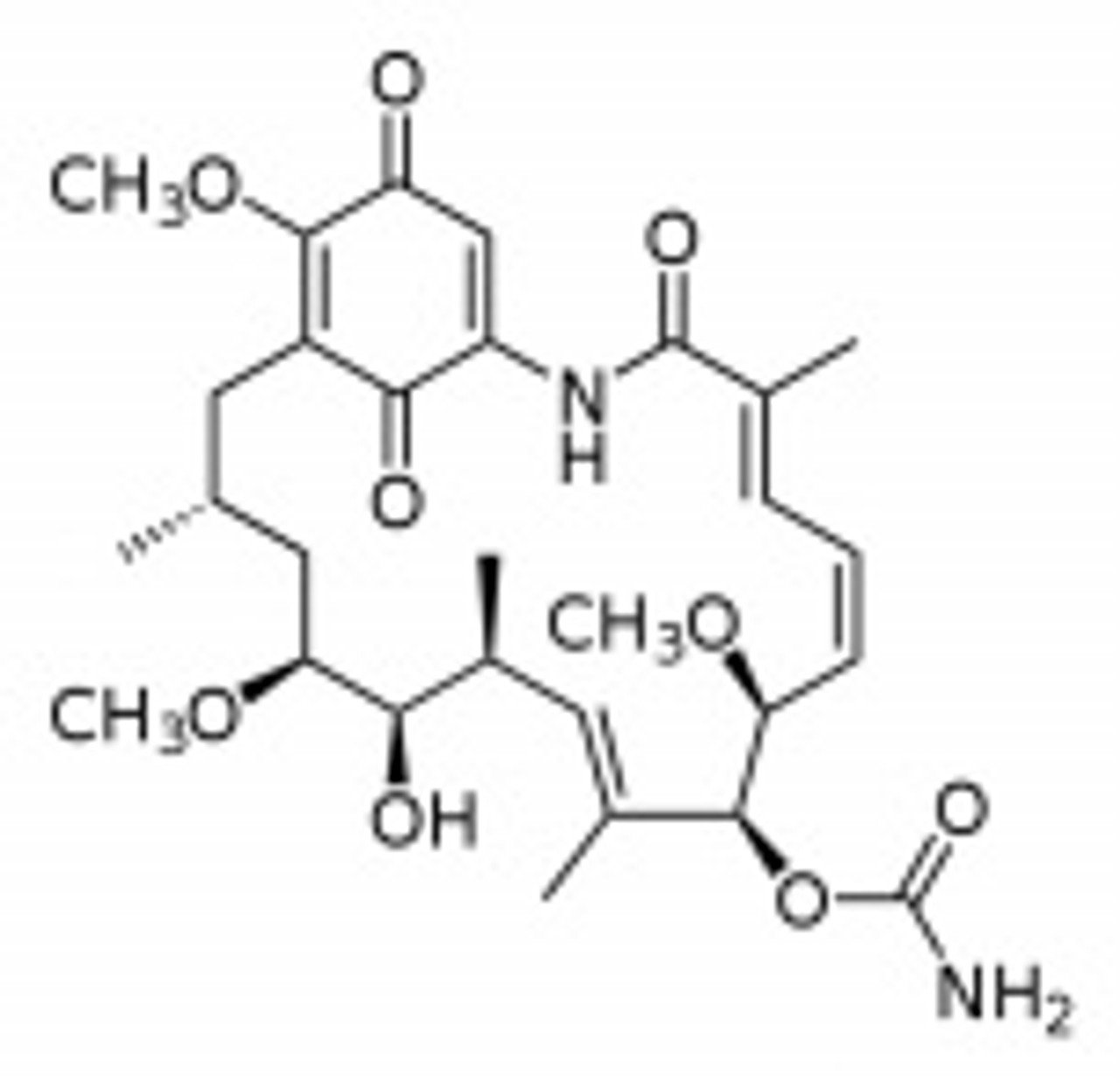
Geldanamycin is a benzoquinone ansamycin antibiotic, which refers to a compound derived from ansamycin, which contain a benzene- or naphthalene-based chromophore linked by an ansa bridge and an amide linkage. Geldanamycin acts as an anti-tumor agent which interacts with the stress induced chaperone protein Hsp90 (heat shock protein 90).
Geldanamycin is soluble in DMSO, methanol and methylene chloride but practically insoluble in aqueous solution.
| Mechanism of Action | Geldanamycin binds to the heat shock protein (Hsp90) and to its endoplasmic reticulum homolog GP96, and thus interferes with conformational maturation of proteins and the cellular stress response. In addition, it is a potent inhibitor of the nuclear hormone receptor family. |
| Cancer Applications | Heat shock protein 90 (Hsp90) is a highly conserved and abundant molecular chaperone which helps to stabilize, fold and regulate a specific group of proteins known as 'clients'. It is a critical component of the proteostasis network and is needed for cell viability in eukaryotes. However, in tumor cells, Hsp90 activity helps stabilize mutated growth factor and signal proteins which facilitate tumor growth. This molecular chaperone is expressed at high levels in a wide variety of human cancers including melanoma, leukemia, colon, prostate, lung, and breast. Geldanamycin is able to bind to and inactivate Hsp90 in cancerous cells leading to degradation of cancer cell proteins The mechanism underlying the anti-cancer effect of HSP90 inhibition is complicated. Geldanamycin has been shown to induce the depletion of mutationally-activated BRAF through several mechanisms (Eichhorn et al, 2001). |
| Molecular Formula | C29H40N2O9 |
| Solubility | DMSO: Soluble Methanol: Soluble Methylene chloride: Soluble Water: 6.34 μg/mL |
| References |
Eichhorn K (2001) Geldanamycin: The prototype of a class of antitumor drugs targeting the heat shock protein 90 family of molecular chaperones. Cell Stress Chaperones 6.2:105-112 Fukuyo Y, Hunt CR and Horikoshi N (2010) Geldanamycin and its anti-cancer activities. Canc. Lett. 290(1):24-35 |