
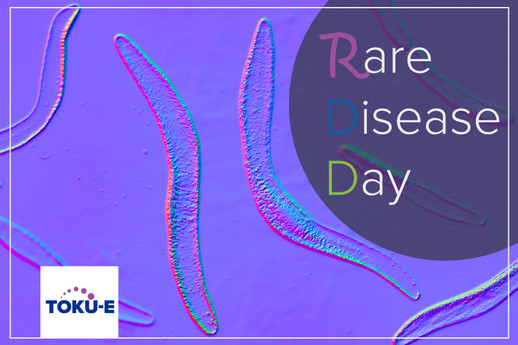
There are over 300 million people living with a rare disease. By definition, a disease is rare when it affects fewer than 1 in 2000 people. The lack of scientific knowledge and reliable information on rare diseases often leads to delays in diagnosis.
Rare Disease Day was first established in 2008 to raise awareness for those diseases that are overlooked, and Lemierre's syndrome is one of these.
Lemierre’s syndrome is named after Andre Lemierre who first discovered this syndrome in 1936. It is a very rare disease that occurs when a bacterial infection (usually a throat infection) spreads into the tissues in the neck and forms a blood clot in the jugular vein. The infected clot travels to other parts of the body (typically the lungs) and causes complications. Only about three to six cases per million people occur each year, but it can be life-threatening if not detected and treated promptly.
Lemierre’s was often dubbed “the forgotten disease” because with the onset of antibiotics, no cases were reported in the 1950s or 1960s. However, this situation could be changing possibly due to an increase in antibiotic resistance.
The primary causal agent of Lemierre’s syndrome is the bacterium Fusobacterium necrophorum, which normally lives in the throat or digestive tract. It may cause this disease by releasing toxins into the surrounding tissue. In some cases, a different bacteria or virus may cause the initial infection which can set the stage for the disease to develop.
The antibiotic Metronidazole is commonly used against F. necrophorum. This bacterium is also sensitive to Amoxicillin-clavulanate. Other commonly used antibiotics for Lemierre's research include Cefoxitin and Ceftriaxone.
We look forward to supporting your in vitro research studies on rare diseases with innovative antibiotics and services.
References
Subramonian A, Bdiri H, Bajwa D, Fong C, Momoh R. Lemierre's Syndrome: A Rare but Resurging Disease. Cureus. 2025 Dec 22;17(12):e99895. link
Wen-Sen Lee W et al (2020) Lemierre's syndrome: A forgotten and re-emerging infection. J. Microbiol, Immunol, Infec 53(4):513-517 link
Rare Disease Day official website