
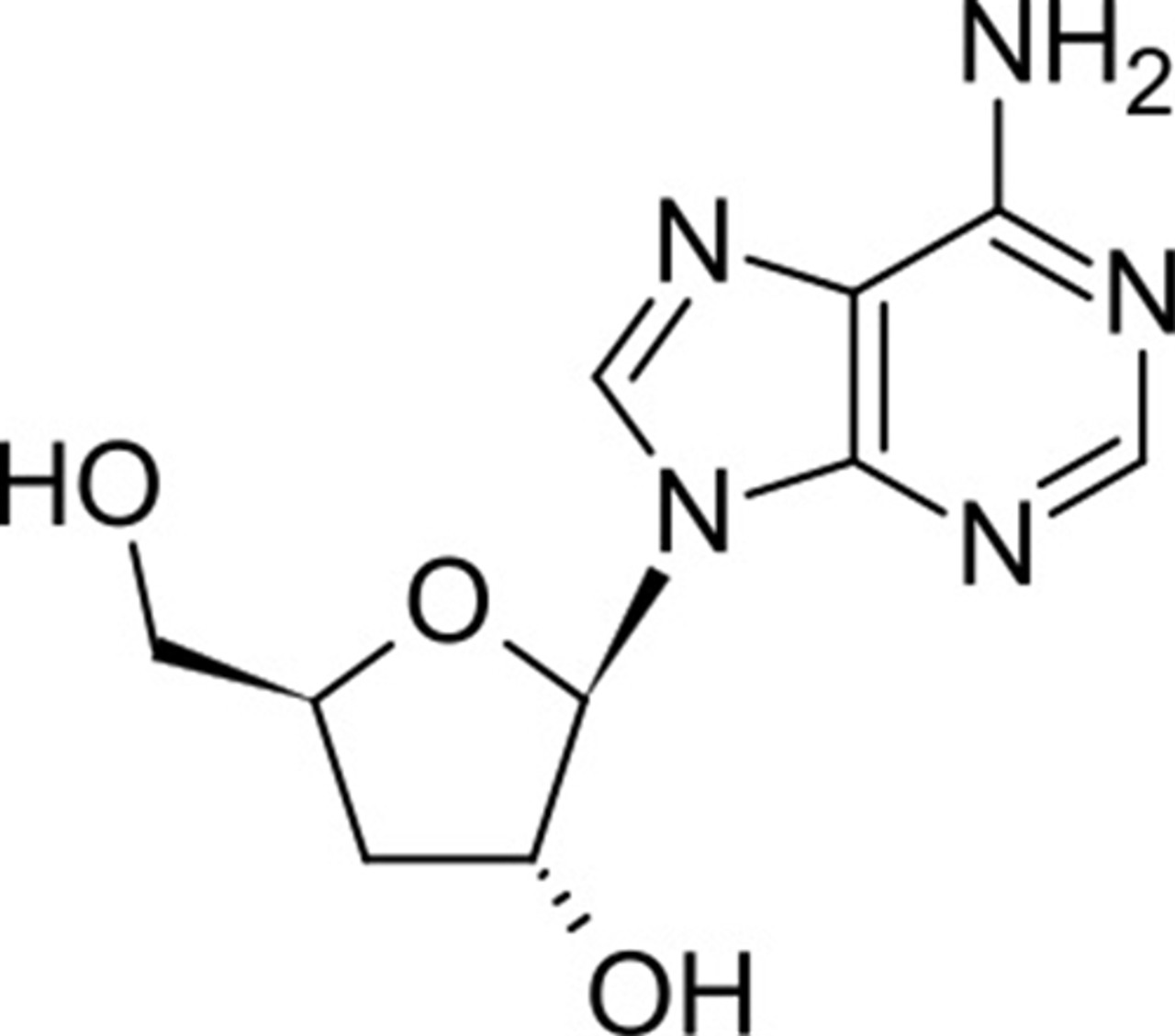
Cordycepin (syn: 3'-deoxyadenosine) is a derivative of the nucleoside adenosine which differs from adenosine in that the hydroxy group in the 3' position is replaced with hydrogen. It was originally derived from the fungus Cordyceps militaris but commercial synthetic versions are available. It has anti-cancer and antitumor properties.
The biosynthetic genes for cordycepin are fully characterized, and the same set of genes produce another adenosine derivative called pentostatin. Pentostatin protects Cordycepin from being deaminated.
This product is considered a Dangerous Good. Quantities above 1 g may be subject to additional shipping fees. Please contact us for specific questions.
| Mechanism of Action | Cordycepin becomes anabolically phosphorylated (3'-dA -> 3'-dATP) to its active triphosphate form and inhibits terminal deoxynucleotidyl transferase (TdT) activity intracellularly. |
| Cancer Applications | Cordycepin is substantially more cytotoxic to terminal deoxynucleotidyl transferase (TdT+) leukemic cells than to (TdT)− leukemic cells in the presence of deoxycoformycin (dCF) (an adenosine deaminase inhibitor) and has been considered as a therapeutic agent for (TdT+) leukemia. |
| Insect Biology Applications |
Cordycepin pharmacology in vivo is not well understood. The roles of Cordycepin in C. militaris during its infection were investigated. Cordyceps fungi produce cordycepin as a means of infecting insect populations, due to its biological activity. The mechanism of action in insects is unknown, but higher Cordycepin production is associated with higher larval mortality. Cordycepin may aid the in vivo growth of C. militaris in silkworm larvae by the influence of the expression of some genes in silkworm larvae (Kato et al, 2021). |
| Molecular Formula | C10H13N5O3 |
| References |
Kodama EN, McCaffrey RP, Yusa K, Mitsuya H (1999) Antileukemic activity and mechanism of action of Cordycepin against terminal deoxynucleotidyl transferase-positive (TdT+) leukemic cells. Biochem. Pharmacol. 59(3):273-281 Kato T, Nishimura K, Suparmin A, Ikeo K, Park EY (2021) Effects of Cordycepin in Cordyceps militaris during its Infection to silkworm larvae. Microorganisms. 9(4):681 PMID 33806171 |