
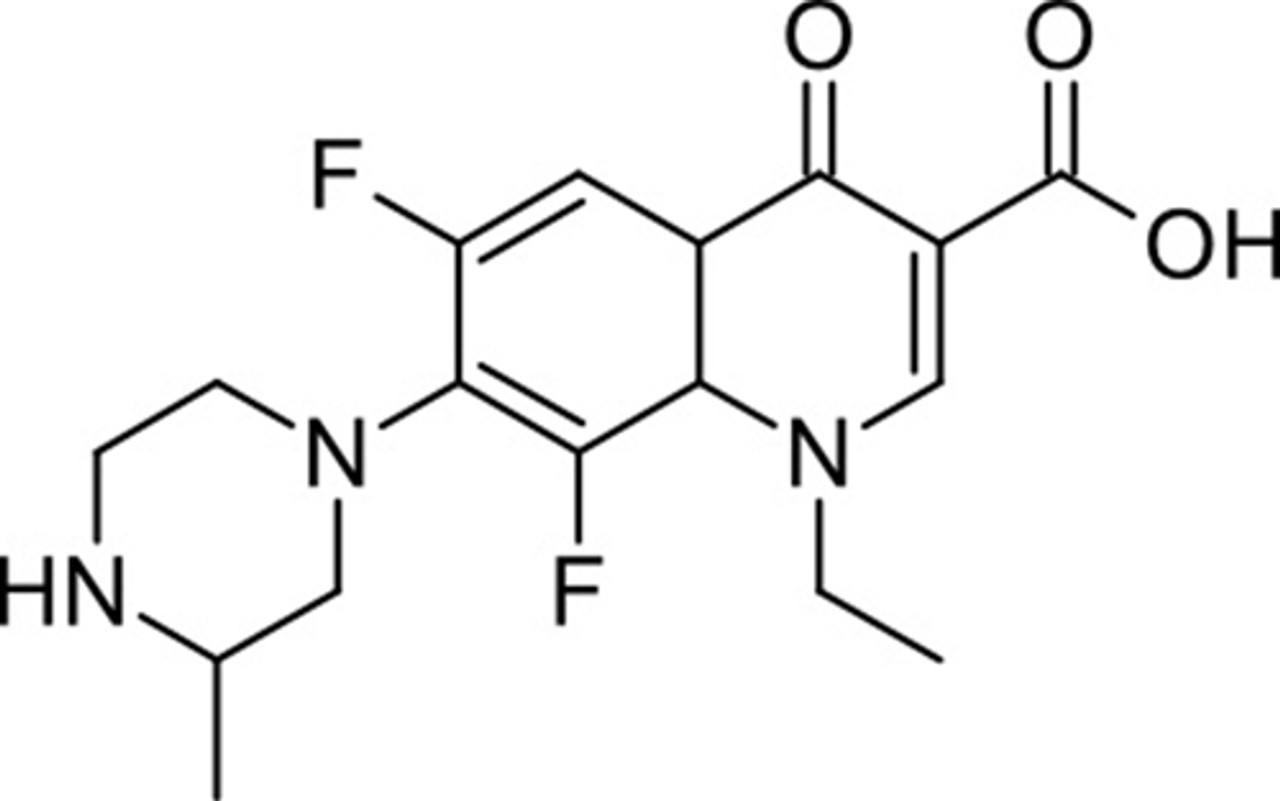
Lomefloxacin Hydrochloride (syn: Lomefloxacin HCl) is the hydrochloride form of Lomefloxacin, a broad-spectrum broad-spectrum fluoroquinolone antibiotic antibiotic. Lomefloxacin HCl has a similar activity level as ofloxacin. It is used against the bacteria causing bacterial infections such as bronchitis and urinary tract infections.
| Mechanism of Action | Fluoroquinolone antibiotics target bacterial DNA gyrase, an enzyme which reduces DNA strain during replication. Because DNA gyrase is required during DNA replication, subsequent DNA synthesis and ultimately cell division is inhibited. |
| Spectrum | Broad spectrum of activity. Targets Gram-positive and Gram-negative bacteria . It has activity against bacteria including E.coli and Neisseria gonorrhoea as well as S. pneumoniae and Staphylococcus aureus. It has activity against Shigella, Salmonella, Campylobacter, gonococcal organisms, and multi-drug resistant Pseudomonas and Enterobacter. |
| Cancer Applications |
Lomefloxacin is able to induce apoptosis and oxidative stress in melanoma cells. Authors also investigated cell viability, redox balance, cell cycle distribution and DNA fragmentation in COLO829 melanoma cells. Lomefloxacin decreased the cell viability in a dose- and time-dependent manner. For cells treated for 24, 48, and 72 h, IC50 values were 0.51, 0.33, and 0.25 mmol/L respectively. The compound induced mitochondrial membrane breakdown as an early hallmark of apoptosis. Their findings provide a molecular basis for the potential use of Lomefloxacin in vivo The results also support the hypothesis that 6,8-difluoroquinolones could be considered a class of compounds with effects on tumor cells and may provide a basis to develop new fluoroquinolone derivatives with potential anticancer activity (Beberok, 2017). |
| Molecular Formula | C17H19F2N3O3 · HCl |
| References |
Beberok A et al (2017) Lomefloxacin induces oxidative stress and apoptosis in COLO829 melanoma cells. Int. J. Molec. Sci. 18(10):2194 Piddock LJ (1990) Mechanism of action of Lomefloxacin. Antimicrob. Agents and Chemother 34(6): 1088-1093 Wadworth AN, Goa KL (1991) Lomefloxacin. A review of its antibacterial activity, pharmacokinetic properties and therapeutic use. Drugs. 42(6):1018-1060 |